Strategic Asset Management Guide: Ranking the Best Roofing Materials for OKC Commercial Buildings
A commercial roof in the 405 is not merely a lid on a building; it is a complex engineering system that must survive a relentless cycle of atmospheric violence. From the "gorilla hail" of a spring supercell to the blistering 100-degree thermal shock of an August afternoon, the structural demands placed on Oklahoma City properties are unique in their intensity. When you begin searching for the Best Roofing Materials for Commercial Buildings, the decision-making process must shift from "what is the cheapest upfront" to "what will protect my operations for the next twenty years."
At Prodigy Restoration, we’ve witnessed the aftermath of every major weather event in Central Oklahoma over the last decade. We know that a "code-compliant" roof in another state is often a "total loss" claim waiting to happen here. This guide is designed to cut through the marketing fluff and provide facility managers and property owners with a data-driven blueprint for choosing materials that turn a roof from a liability into a high-performing asset.
TPO (Thermoplastic Polyolefin): The Dominant Force in Modern Commercial Roofing
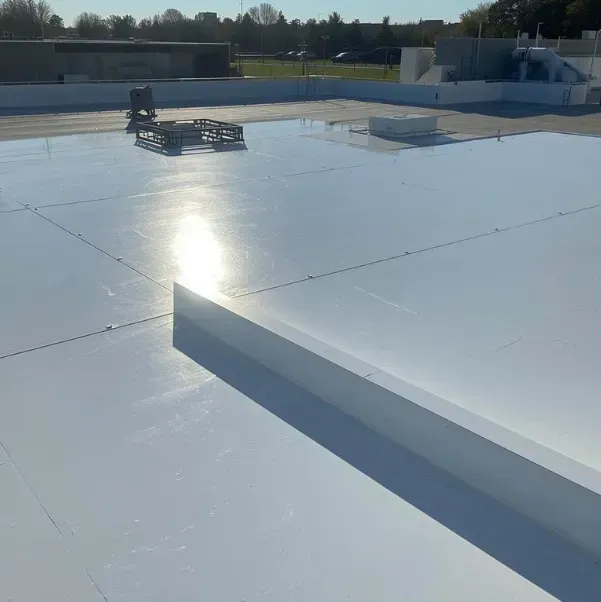
For most modern commercial facilities in Oklahoma City, TPO has rightfully claimed its spot as the industry standard. TPO is a single-ply, white reflective membrane that addresses the two primary stressors of the Oklahoma climate: extreme radiant heat and severe wind uplift.
The Thermal Advantage: Reflectivity and Energy Savings
During an Oklahoma summer, a black or dark-colored roof can reach surface temperatures exceeding 170°F. TPO’s bright white surface qualifies it as a "cool roof," reflecting a vast majority of solar radiation back into the atmosphere. Many of our clients report a 15% to 30% reduction in cooling costs after switching to TPO, as the material significantly reduces the thermal load on the building’s HVAC systems.
Heat-Welded Seams: Superior Wind Resistance
In a region where straight-line winds regularly exceed 60 mph, the seams of a roof are its most common point of failure. Unlike EPDM, which uses adhesives or tape, TPO seams are heat-welded together using specialized robotic welders. This process creates a physical bond that is 3 to 4 times stronger than the membrane itself, essentially turning your entire roof into one monolithic, watertight sheet that can withstand the intense pressure shifts of a Central Oklahoma storm.
Metal Roofing: The Ultimate Lifetime Solution for High-End Assets
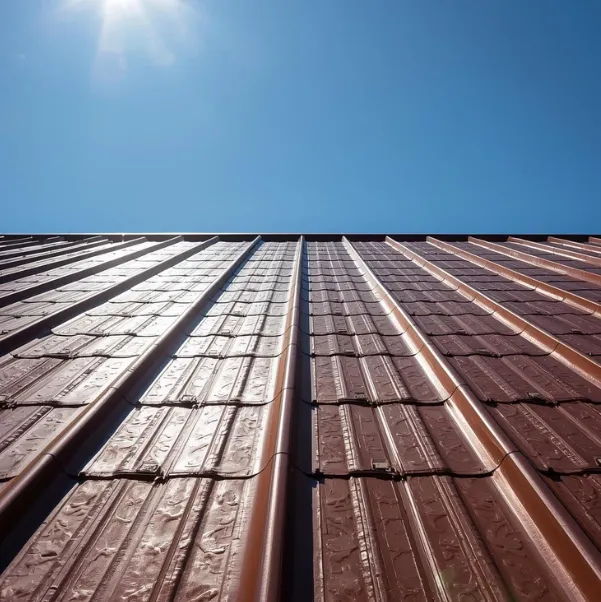
When longevity and storm resilience are the non-negotiable priorities, metal is frequently cited as one of the Best Roofing Materials for Commercial Buildings. While the initial investment is higher than single-ply membranes, the lifecycle cost of a standing seam metal roof is often the lowest in the industry due to its 50-year-plus lifespan.
Withstanding the Impact of "Gorilla Hail"
Metal roofing, particularly in 24-gauge steel, offers a level of impact protection that is nearly impossible to match. While extreme hail may cause cosmetic "dimpling," the structural integrity of the roof remains intact, preventing the interior water damage that shuts down businesses. For properties that house sensitive electronics, pharmaceutical inventory, or high-value machinery, the "one-and-done" nature of metal roofing provides invaluable peace of mind.
Aerodynamic Engineering and Uplift Protection
Standing seam metal systems utilize concealed fasteners and interlocking ribs. This means there are no exposed screws that can back out or rust over time. In the high-wind environment of the 405, this aerodynamic profile allows wind to flow over the roof rather than catching the edges and peeling sections away. It is the gold standard for durability in "Tornado Alley."
Modified Bitumen: The Multi-Ply Heavyweight for High-Traffic Roofs
Not every commercial roof is a "set it and forget it" environment. If your building requires frequent access for HVAC maintenance, solar array management, or communication equipment, a single-ply membrane like TPO might be too vulnerable to punctures. In these cases, Modified Bitumen stands out among the Best Roofing Materials for Commercial Buildings.
Puncture Resistance and Redundancy
Modified Bitumen (often called "Mod-Bit") is a modern evolution of the classic built-up roof. It utilizes multiple layers of asphalt-saturated felts reinforced with fiberglass or polyester. This creates a thick, redundant barrier that can handle heavy foot traffic and the accidental tool drops that occur during industrial maintenance. If your facility has a high density of rooftop units, the physical "meat" of a Mod-Bit system provides a safety margin that thinner membranes lack.
Handling Oklahoma’s Thermal Cycles
Oklahoma’s rapid temperature swings—where it can be 80°F at noon and 30°F by midnight—can cause materials to become brittle. Modified Bitumen is infused with polymers like SBS (Styrene-Butadiene-Styrene), which give the asphalt rubber-like qualities. This allows the roof to expand and contract without cracking, maintaining a waterproof seal during the most extreme freeze-thaw cycles.
The Invisible Engine: Why Roof Ventilation Solutions Matter
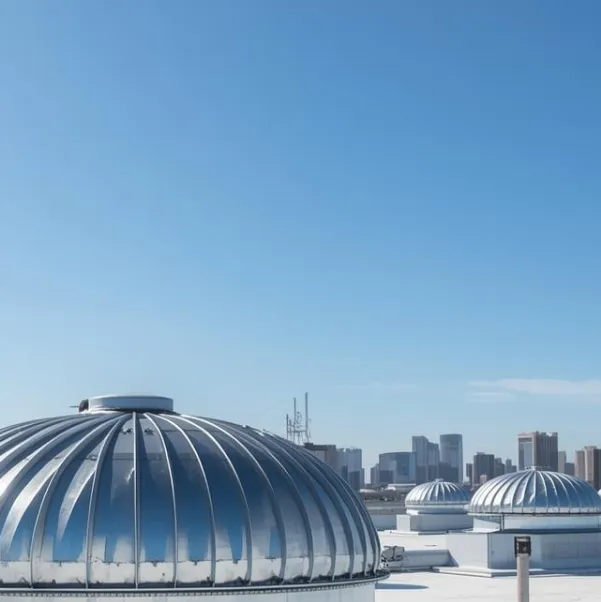
Choosing the right material is only half the battle. One of the most common reasons commercial roofs fail prematurely in Oklahoma City is "cooking" from the inside out. Even the best membrane will blister and degrade if the building cannot breathe. This is where professional Roof Ventilation Solutions become critical.
Preventing Moisture Entrapment and Deck Rot
In large commercial structures, stagnant air traps moisture from industrial processes and occupancy. This moisture condenses on the underside of the roof deck, leading to rusted steel joists or rotting wood decking. We implement balanced ventilation systems that flush out this humid air, protecting the structural substrate that supports your roofing material.
Managing the Stagnant Attic Heat
For steep-slope commercial buildings, such as churches or retail strips, proper ventilation reduces the attic temperature. By flushing out the 150-degree air that pools at the peak of the building, we preserve the chemical integrity of the asphalt or metal above it. A well-ventilated roof isn't just a comfort feature; it is a lifespan multiplier for your investment.
Navigating the Complexity of Storm Damage Restoration
When a catastrophic event occurs, the search for the Best Roofing Materials for Commercial Buildings often transitions into an insurance claim scenario. This is where many property owners feel the most pain. Storm Damage Restoration for commercial assets is a battle of documentation and forensic evidence.
Forensic Inspection and Technical Advocacy
Insurance adjusters often look for "functional damage" that is immediately apparent. However, our team utilizes thermal imaging and moisture probes to identify damage that will manifest as a failure in six months—such as "bruised" insulation or micro-fractures in a TPO seam. We act as your technical witness, ensuring that your insurance carrier honors the policy you’ve been paying for so you can restore your property with the materials it actually needs to survive the next storm.
Compliance and Code Upgrades
In the 405, building codes are constantly shifting to meet higher wind-load and energy efficiency standards. During a Storm Damage Restoration project, we ensure that your new roof isn't just a replica of the old one, but a code-compliant upgrade that enhances your property's value and reduces your future liability.
Class 4 Standards: Turning Your Roof into a Financial Hedge
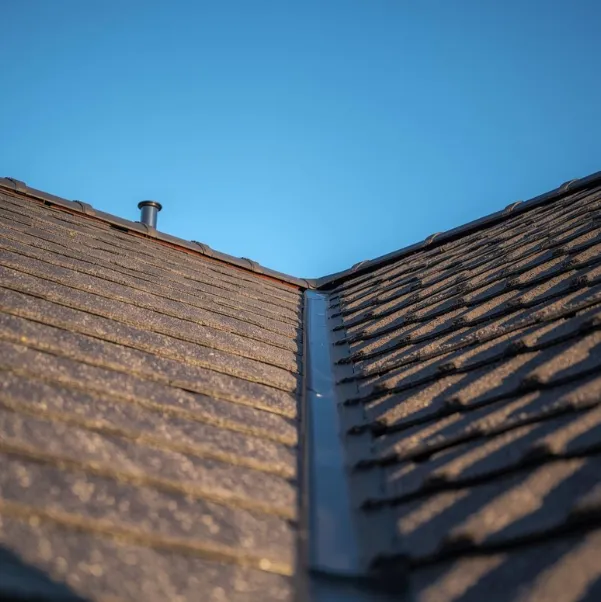
Regardless of whether you choose metal, TPO, or Mod-Bit, we prioritize materials that meet the Class 4 Impact Resistance standard. While often discussed in residential contexts, Class 4 Impact Resistant Shingles and commercial membranes represent a significant financial opportunity for businesses.
Most Oklahoma insurance carriers offer substantial premium credits for Class 4 rated systems. Because these materials are engineered to withstand high-velocity impact without fracturing, they represent a significantly lower risk. Over the life of the roof, the insurance discounts often pay for the entire cost of the material upgrade, making it one of the few construction decisions that provides a direct, measurable ROI.
The Prodigy Restoration Standard: Precision Over Speed
A roof is only as good as its weakest seam. At Prodigy Restoration, we don't just "install roofing"; we build integrated defense systems. This means using six-nail patterns on steep-slope sections, robotic heat-welding on flat membranes, and high-temp synthetic underlayments that can survive the Oklahoma heat.
We are local, we are accountable, and we understand the specific nuances of the Oklahoma City metro area. We don't chase storms across state lines; we live in the neighborhoods we protect. When you partner with us, you are getting a team that prioritizes the long-term health of your facility over a quick turnover.
Protect Your Asset Before the Next Storm Cycles In
The Oklahoma sky doesn't offer many second chances. A "good deal" on a sub-par commercial roof is a debt you will eventually have to pay in repairs and downtime. By choosing the right materials and the right partner, you can turn your roof into a fortress.
Protect Your Property Today
Get the process started by filling out the form below. Schedule your free inspection and let us provide the clarity you need for your next roof project.