Flat Roofing Solutions vs. Traditional Pitch: A Strategic Blueprint for Oklahoma Commercial Assets
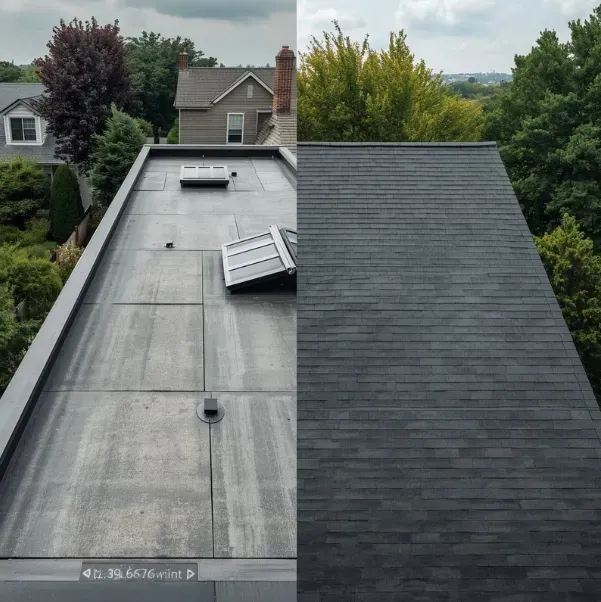
Choosing between a low-slope system and a traditional pitched roof isn't just an architectural preference; for a business owner in the 405, it is a high-stakes calculation of operational overhead and storm resilience. Many property managers inherit a structure and simply replace "like for like," failing to realize that the wrong geometry can lead to catastrophic ponding water or wind-uplift issues during a typical Oklahoma spring. When you weigh Flat Roofing Solutions for Businesses against traditional steep-slope options, you are effectively deciding how your building will manage energy, drainage, and long-term maintenance costs.
At Prodigy Restoration, we’ve seen how Oklahoma’s volatile atmospheric pressure turns minor installation shortcuts into major structural liabilities. Whether you are managing a retail center in Edmond or a warehouse facility in Moore, your roof is the primary defender of your inventory and your tenants. We believe that an informed client is our best partner, which is why we break down these systems through the lens of local engineering and fiscal common sense.
The Low-Slope Advantage: Why Businesses Prioritize Flat Roofing Solutions
Most commercial structures utilize Flat Roofing Solutions for Businesses because they maximize the usable footprint of the building. Unlike a pitched roof that creates dead attic space, a flat roof allows for the strategic placement of HVAC units, solar arrays, and satellite equipment, keeping these vital assets secure and accessible for maintenance.
Furthermore, the initial installation cost for a flat system is often lower because the surface area is smaller than a pitched roof covering the same square footage. However, this upfront saving requires a commitment to superior drainage engineering. In the 405, where a single afternoon thunderstorm can dump three inches of rain, a flat roof without a precision-tapered insulation system becomes a swimming pool that threatens the structural integrity of your joists.
Traditional Pitched Roofing: When Steep-Slope Makes Sense
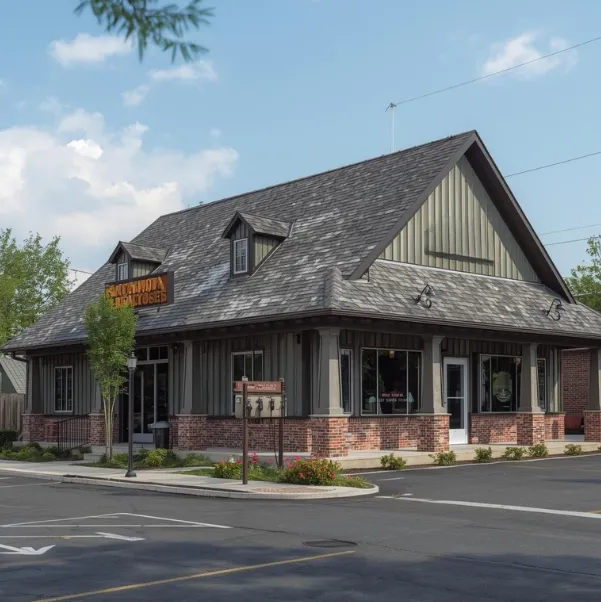
While flat systems dominate the industrial landscape, traditional pitched roofing—utilizing asphalt shingles or metal panels—remains a staple for office parks and multi-family units. The primary benefit here is gravity. A steep-slope roof naturally sheds water, ice, and debris, significantly reducing the risk of "ponding" that plagues poorly maintained flat surfaces.
The downside for businesses is the increased "wind-sail" effect. A high-pitched roof catches the wind more aggressively, which can lead to shingle blow-offs during straight-line wind events. For these structures, we move beyond standard residential practices and implement industrial-grade fastening patterns to ensure the perimeter remains locked down when the sirens go off.
Maximizing the Lifespan of Flat Roofing Solutions for Businesses
If you opt for a low-slope membrane, the choice of material is your 20-year financial hedge. We specialize in TPO (Thermoplastic Polyolefin) because it addresses Oklahoma’s two biggest environmental threats: UV radiation and high-velocity wind. TPO is heat-welded at the seams, creating a monolithic surface that is far more durable than the taped seams of older EPDM rubber roofs.
The Role of Tapered Insulation and Drainage
Effective Flat Roofing Solutions for Businesses must include a custom-tapered insulation plan. We use "slope-to-drain" technology to ensure that every drop of water is funneled toward internal drains or scuppers. By eliminating standing water, we prevent the "freeze-thaw" cycle from expanding microscopic cracks in the membrane, which is the leading cause of "ghost leaks" in commercial buildings across Oklahoma City.
The Impact of Class 4 Standards on Commercial Durability
Whether you choose a flat membrane or a pitched shingle system, the impact rating of your materials is a non-negotiable factor. In a state where golf-ball-sized hail is an annual expectation, investing in Class 4 Impact Resistant Shingles or high-mil TPO membranes is a strategic insurance move.
Most Oklahoma insurance carriers offer substantial premium credits for Class 4 rated systems. Because these materials are engineered to withstand high-velocity impact without fracturing, they represent a lower risk to the insurer. We help property managers document these upgrades during the installation process, turning a necessary maintenance expense into a recurring annual insurance saving that hits the bottom line.
Integrating Roof Ventilation Solutions for Climate Control
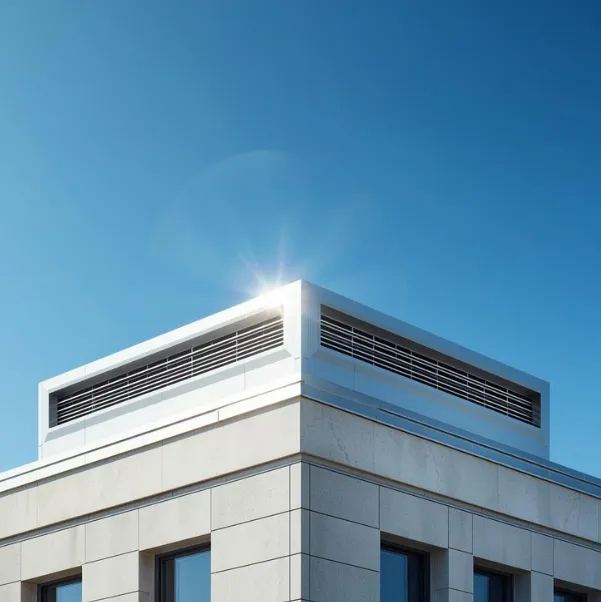
A common misconception is that commercial roofs don't need to breathe. In reality, stagnant air is the enemy of any large-scale structure. We implement advanced Roof Ventilation Solutions that flush out the moisture and heat generated by industrial processes or dense office occupancy.
If your building traps humidity, it can lead to "interstitial condensation," where moisture collects between the roof deck and the membrane. This leads to deck rot and mold that can shut down your operations for weeks. By balancing the airflow, we protect your decking and improve the overall R-value of your building, keeping your cooling costs manageable during an Oklahoma July.
Navigating the Storm Damage Restoration Process
When the inevitable Oklahoma supercell hits your facility, the path to recovery is often buried in red tape. Storm Damage Restoration for businesses is fundamentally different from residential claims because it involves complex "business interruption" clauses and higher liability stakes.
We act as your technical witness during the adjustment process. Our team utilizes thermal imaging to detect moisture entrapment that isn't visible to the naked eye, ensuring that your insurance carrier pays for a full restoration rather than a temporary patch. In the 405, we know that a "bruised" membrane today is a failing roof next year; we make sure the job is done right the first time.
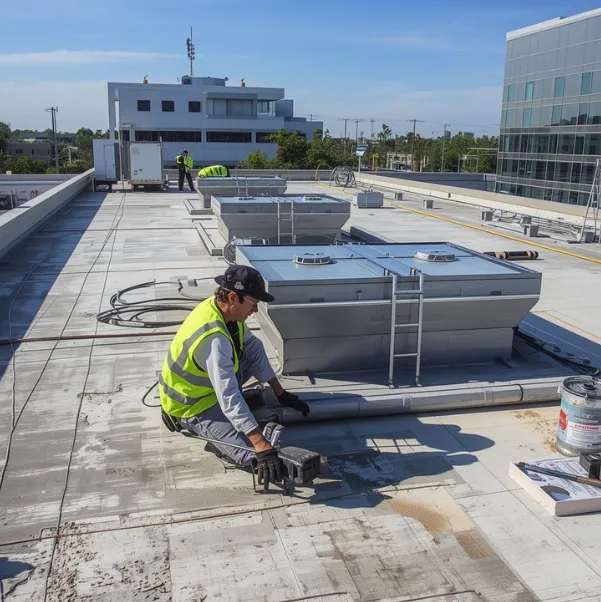
Maintenance and the "Stealth" Installation
The biggest pain point for any business owner is downtime. A roofing project that blocks your loading docks or creates a noise nuisance for your tenants is a failure of project management. We prioritize "stealth" installations, coordinating our crews and debris removal around your peak business hours.
We also offer proactive maintenance programs designed to catch "seam failures" and "clogged drains" before they turn into emergency calls. By performing biannual inspections, we extend the life of your Flat Roofing Solutions for Businesses, ensuring that you get the maximum ROI out of your investment.
Conclusion: Making the Strategic Choice for Your Property
Your roof is the most important part of your building's envelope. Whether you choose the modern efficiency of TPO flat systems or the classic drainage of a pitched metal roof, the quality of the engineering is the only thing that stands between you and the next storm.
Protect Your Property Today
Get the process started by filling out the form below. Schedule your free inspection and let us provide the clarity you need for your next roof project.